
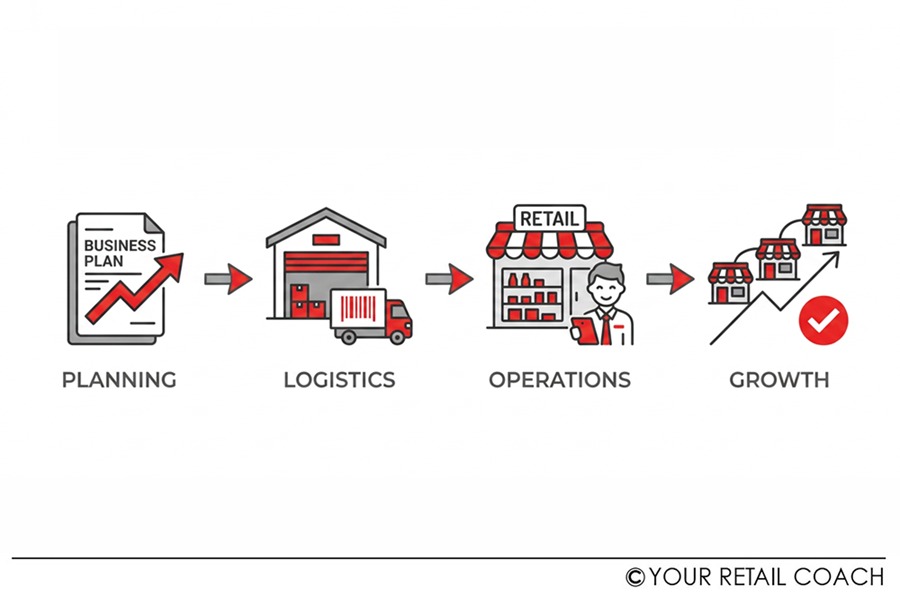
When Neha grew her business from a few stores to many she thought it would get easier to manage. Instead she faced problems like inconsistent performance, higher costs and stores not doing well. What worked for a number of stores didn’t work as she expanded.
Many retailers face this issue. As they grow they need a way to manage their stores and operations. Without it things can get complicated quickly.
Good operations management is not about keeping stores open. It’s about creating systems that make things run smoother, improve the customer experience and help the business grow. Retailers who get their operations from the start are better off and can adapt to changes in the market.
Building a Strong Foundation with Simple Processes
Neha’s task was to find out where her stores were going wrong. Each store did things a bit differently which caused confusion and delays.
Simplifying processes is key to managing operations well. It means getting rid of steps, reducing hold-ups and making sure all stores work smoothly. A clear approach helps improve efficiency and consistency.
Important areas to focus on include:
- Standardizing how stores operate across all locations
- Making workflows simpler to reduce delays and mistakes
- Ensuring teams know their roles and responsibilities
When processes are simple, stores run efficiently, costs are controlled and customers get faster and more reliable service. Neha’s retail business can now focus on growth with stores and happy customers. Retail operations need to be efficient.
Leveraging SAP Store Management for Operational Control
As my business grew I struggled to keep track of what was happening across all my stores. Reporting was a process making it hard to see how each store was doing and respond quickly.
That’s where systems like SAP store management come in. They are really important. With technology I can control everything from one place while still allowing each store to be flexible.
SAP store management brings together inventory, billing and reporting creating a system for operations. This reduces the work I have to do and makes things more accurate.
Some benefits I have seen are:
- Real-time updates on how each store’s doing
- Better communication between my teams and individual stores
- The same processes used across all my stores
Having all my technology working together is crucial for growing my business and keeping control across locations.
Optimizing Inventory and Demand Forecasting
One of Neha’s problems was having too much or too little inventory in different stores. Some stores would run out of stock while others would have much. This hurt her sales. Used up a lot of her working capital.
Good retail store management means being able to predict demand and manage inventory well. By looking at data and market trends retailers can make better predictions about what they will need.
Some key things to do are:
- Using data to plan for the future and manage inventory
- Making sure stock levels match what is selling
- Reducing inventory and stockouts
Managing inventory well means having products available when customers want them while keeping costs down. Finding this balance is important, for increasing profits and keeping customers happy.
Enhancing Customer Experience Through Operational Excellence
I realized that when our operations are not running smoothly it directly affects how happy our customers are. Long lines, products being out of stock and slow service make people unhappy.
To make retailing work well we need to focus on making customers happy. When our operations are streamlined, service is faster and products are available. Interactions are smoother.
Some key things we can improve on are:
- Reducing wait times by managing queues
- Making sure products are available in all stores
- Improving how fast and accurate our service is
Operational excellence is not just about getting things done efficiently. It actually affects how people see our brand, which’s crucial for making them loyal customers who come back.
Enabling Real Time Decision Making and Workforce Flexibility
As the number of customers in our stores changed I found it hard to manage staffing properly. Some stores had many staff during slow periods while others were understaffed during busy times.
Managing a store today requires making decisions in real time using data to guide us. We need to be able to adjust staffing and operations on the fly based on demand.
Some important things to do are:
- Adjusting staff levels based on how many customers are in the store right now
- Training employees to handle roles
- Keeping an eye on performance metrics to make good decisions
Having a workforce makes us more efficient and ensures we deliver better service, especially in retail environments that are changing fast.
Integrating Omnichannel Operations for Seamless Retailing
Neha was expanding her business online. She faced a new problem. Her online store and physical store were not working together so customers were having experiences.
The people in charge of stores today need to make sure that all their operations are connected. Customers want to have an experience whether they are shopping in a physical store or online.
There are a few things to consider when integrating operations:
- Making sure that the inventory is the online and in physical stores
- Having the prices and promotions everywhere
- Letting customers pick up their orders in store, which is called click and collect
When retail stores are integrated it is more convenient for customers and retailers can keep up with what customers want in a market.
Conclusion
The key to making a retail business bigger is to manage the day to day operations well. We can see this with Neha, when a retail business grows fast without a good plan it can get messy and things do not go as well as they should. Retailers need to make sure everything runs smoothly and use tools like SAP store management to help keep an eye on the stock and make sure all parts of the business work together.
These days retail is very competitive so retailers have to be very good at running their operations. This is necessary for retail businesses to do well all the time, make customers happy and keep growing over time across all of their stores. Effective management of retailing operations, like expansion, is very important for retail businesses to succeed.
Why YRC
YRC helps businesses that are growing by creating systems to manage their stores in a way that makes sense for their business goals.
YRC does a things to help retailers, including:
- Designing systems to manage stores that work for businesses with locations
- Helping retailers use SAP store management and other integrated systems
- Making sure that all stores are following the processes so everything runs smoothly
- Creating plans based on data to help with inventory, staffing and tracking performance
- Giving advice on how to make improvements that can be measured
YRC helps retailers go from having separate operations to having a connected and efficient system that supports growth. YRC and omnichannel operations and retailing operations are important for retailers, like Neha who want to succeed.